
October 31, 2026
Buying foam in bulk is not simply about finding a material at the right price. For manufacturers, the choice can affect product performance, production efficiency, durability, and even the consistency of finished goods. That is why understanding material specifications before placing a wholesale order is essential.
When EVA Foam is being sourced for industrial applications, buyers need to look beyond basic thickness and appearance. Density, flexibility, cell structure, surface finish, dimensions, and intended application can all influence how the material performs. Moreover, purchasing in larger quantities makes consistency even more important because variations between batches can create problems during production.
From product specifications to supplier capabilities, this blog explains the main factors buyers should consider when sourcing wholesale foam and choosing the right manufacturing partner.
The first step is understanding where the foam will be used. Footwear, sports equipment, protective products, packaging, mats, and industrial components can require very different characteristics.
For example, a manufacturer producing cushioning products may prioritize flexibility and shock absorption, while another application may require greater dimensional stability or resistance to repeated compression.
Therefore, avoid selecting material solely because it looks or feels suitable. The technical requirements of the finished product should guide the specification.
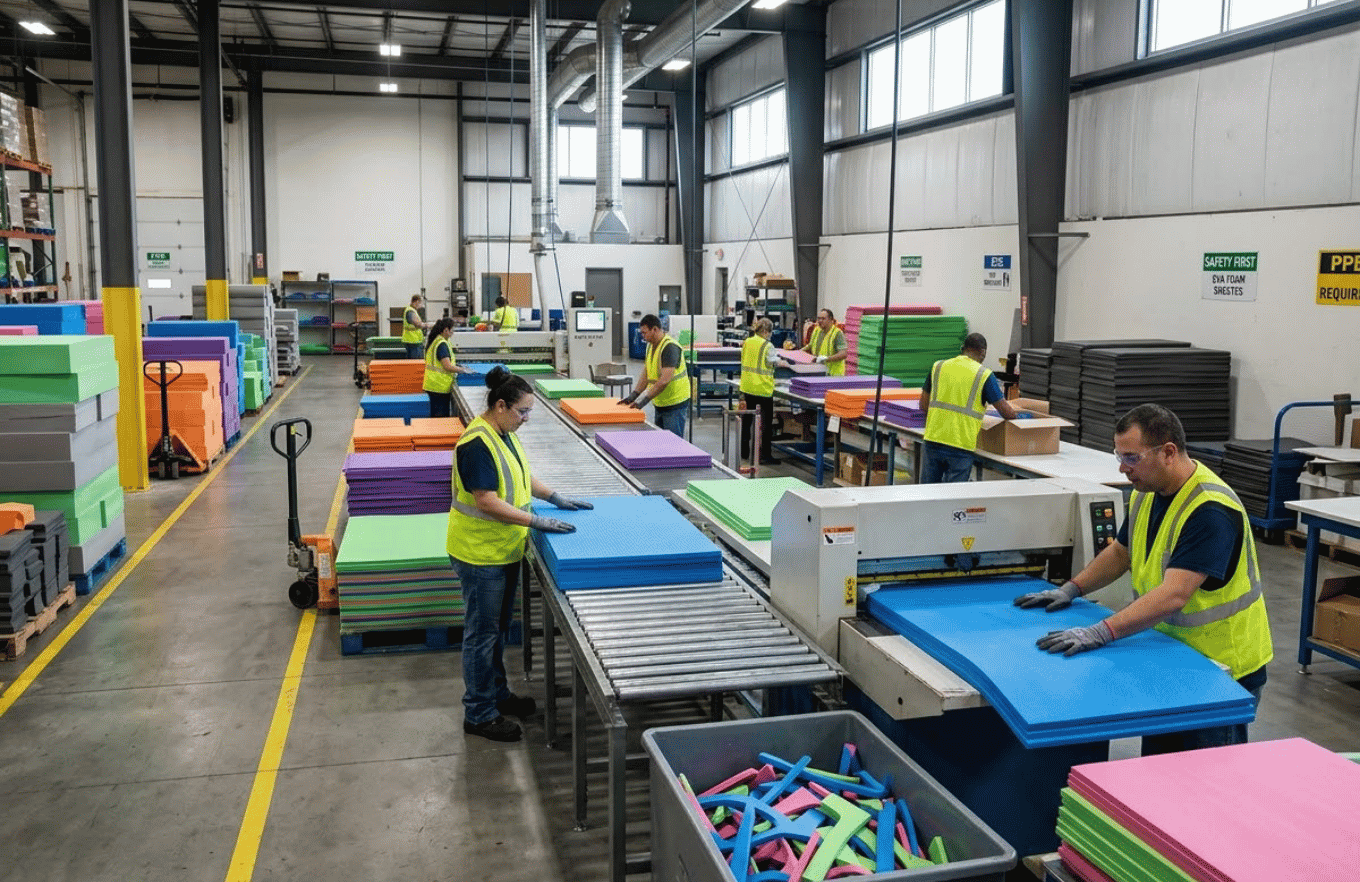
Density is one of the most important specifications to review because it can influence firmness, weight, cushioning, and overall performance. Thickness also needs to match the design requirements of the final product.
Buyers should request clearly documented specifications and confirm acceptable tolerances before production begins. This becomes particularly important when purchasing wholesale quantities, where consistency across batches can directly affect manufacturing results.
Sheet or roll dimensions should match the buyer's cutting and production requirements wherever possible. Suitable dimensions can reduce material waste and make production more efficient.
Surface finish also deserves attention when the foam will be laminated, printed, bonded, or incorporated into another product.
Different industries place different demands on foam. For example, Yoga Mat Manufacturers may need material with a suitable balance of cushioning, flexibility, surface feel, and dimensional stability.
Likewise, sports and footwear manufacturers may have their own performance requirements. Understanding these needs before contacting suppliers allows buyers to request a more appropriate material rather than adapting their product around whatever stock is available.
A good wholesale purchase depends on more than the foam itself. Buyers should assess production capacity, quality-control procedures, technical support, lead times, customization capabilities, and communication.
The supplier should also be able to provide clear information about available grades and specifications. Yoga Mat Manufacturers can benefit from discussing application-specific requirements before finalizing material selection.
Samad Foam is presented by Samad Group of Industries as a supplier of unicellular foams, with applications spanning products such as jackets and sporting goods. The company also states that its foam has been supplied as Adidas-compliant material in Pakistan.

Before committing to a large order, request samples and evaluate them against your product requirements. Check thickness, density, flexibility, dimensions, appearance, and any characteristics that matter during manufacturing.
Once approved, the sample can serve as a practical reference for subsequent production.
Wholesale buyers should also ask how material consistency is maintained between production batches. This is particularly important for manufacturers placing recurring orders because changes in foam characteristics can affect cutting, bonding, forming, and finished-product performance.
A one-time order and a recurring supply arrangement require different planning. Businesses with regular production should discuss expected volumes, lead times, packaging, storage, and future specifications with the supplier.
The wider manufacturing background of Samad Group includes a dedicated foam business that emerged in the 1990s and developed closed-cell foam applications across several product categories.
For buyers, this type of established production background can be one factor when comparing potential suppliers.
Price should certainly be considered, but it should be evaluated alongside material consistency, specifications, production capacity, delivery timelines, and technical requirements. A lower quotation may not provide better value if inconsistent material creates production waste or quality problems.
Most importantly, buyers should document the agreed specifications before placing the wholesale order. Clear documentation gives both parties a common reference and helps prevent misunderstandings.
Wholesale foam sourcing becomes much easier when buyers approach it as a technical purchasing decision rather than a simple price comparison. Defining the application, checking density and thickness, evaluating samples, confirming dimensions, and discussing batch consistency can help manufacturers make better choices.
Whether the material is being used for industrial components, sports products, footwear, or applications handled by Yoga Mat Manufacturers, the right specifications should always come first. A structured sourcing process also makes it easier to build long-term supply relationships and maintain consistent product quality.
Planning your next wholesale foam order? Connect with Samad Group to discuss your application, specifications, and bulk sourcing requirements with the right team.
Check density, thickness, dimensions, flexibility, surface finish, application suitability, batch consistency, production capacity, and lead time before placing a bulk order.
Yes, manufacturers can discuss requirements such as thickness, dimensions, density, and other material characteristics with their foam supplier to identify a suitable specification.
Approve a sample before bulk production, document the agreed specifications, clarify acceptable tolerances, and discuss how the supplier maintains consistency between production batches.